
As I stood in my kitchen, the enticing aroma of garlic sizzling hit me like a comforting hug. That’s when I decided to whip up a classic Thai Basil Chicken, or Pad Krapow Gai. This quick dinner recipe not only showcases tender chicken thighs and fresh Thai basil but it also transforms your weeknight meals into an instant culinary getaway. In just 30 minutes, you can serve up a wholesome, low-calorie dish that’s bursting with vibrant flavors. Not to mention, it’s beginner-friendly and easily adjustable for your vegetarian friends. Curious about how this delightful fusion of heat and aromatic goodness comes together? Let’s dive into the details!
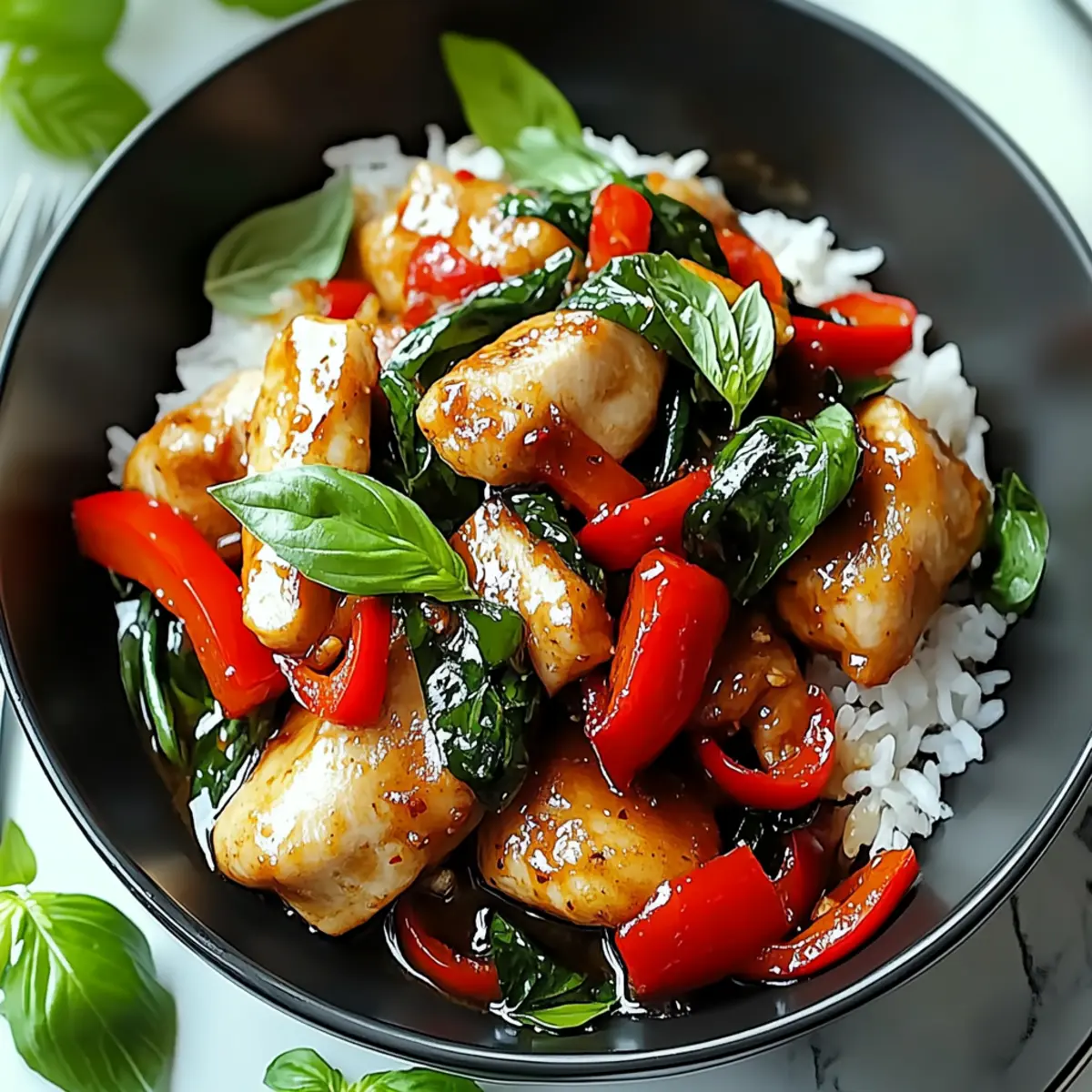
Why Is Thai Basil Chicken a Must-Try?
Simplicity: This dish comes together in just 30 minutes, making it perfect for busy weeknights. Beginner-friendly, even novice chefs can whip it up without a hitch!
Flavor Explosion: The vibrant herbs and spices create a mouthwatering blend of sweet and savory, sure to impress anyone at your dinner table.
Customizable: Vegetarian options are available — easily swap chicken for tofu or tempeh and still enjoy all the flavors!
Low-Calorie: At around 400 calories per serving, it fits right into a healthier lifestyle without sacrificing taste.
Versatile: Serve it over jasmine rice or even lay it on a bed of greens for a fresh twist! If you’re looking for more delicious chicken ideas, check out my recipes for Sweet Spicy Chicken and Cheesy Dynamite Chicken.
This Thai Basil Chicken recipe is your ticket to a quick, flavorful meal that delights everyone!
Thai Basil Chicken Ingredients
For the Chicken
- Chicken Thighs – Juicy and tender, they absorb the savory sauce beautifully. Substitute with breasts if preferred, but cooking time will vary.
- Vegetable Oil – A neutral oil with a high smoke point, perfect for sautéing without altering flavors.
For the Aromatics
- Garlic – Minced for best results, it adds essential flavor and aroma to the dish.
- Shallots – Sliced thin for a delicate sweetness and a little crunch.
- Red Chili – Adjust this fiery element to taste for customizable heat.
For the Veggies
- Bell Pepper – Adds a refreshing crunch that pairs well with the tender chicken.
- Thai Basil – The star of the dish, providing that unique floral and peppery flavor essential to authentic Pad Krapow Gai.
For the Sauce
- Oyster Sauce – Infuses richness and depth; can be swapped for vegetarian stir-fry sauce if needed.
- Soy Sauce – Introduces salty flavor and umami to the dish.
- Fish Sauce – A small amount adds salty complexity, enhancing the overall profile.
- Sugar – Just a touch balances out the salty and spicy elements beautifully.
- Chicken Broth – Thins the sauce while enhancing flavor, creating that delightful glaze.
Embrace the culinary adventure with this Thai Basil Chicken recipe, perfect for a quick dinner that brings the flavors of Thailand right to your kitchen!
Step‑by‑Step Instructions for Thai Basil Chicken
Step 1: Heat the Oil
Begin by heating 2 tablespoons of vegetable oil in a large wok or skillet over medium-high heat. Swirl the oil around to coat the surface, allowing it to shimmer for about 1 minute. This sets the stage for a perfect sauté, ensuring your Thai Basil Chicken has a great flavor base.
Step 2: Sauté Aromatics
Add 3 tablespoons of minced garlic and 2 thinly sliced shallots to the hot oil. Stir frequently for about 1 minute, until the garlic is fragrant and just turning golden. This fragrant mix will be the backbone of your Thai Basil Chicken, providing aromatic depth to the dish.
Step 3: Cook the Chicken
Introduce 1 pound of sliced chicken thighs to the pan in a single layer. Cook for about 5-7 minutes, flipping halfway through, until the chicken is browned and cooked through. Look for a golden-brown exterior and no pink remaining to ensure deliciously tender chicken for your Pad Krapow Gai.
Step 4: Add Vegetables
After the chicken is cooked, toss in 1 sliced red chili and 1 diced bell pepper. Stir the mixture for an additional 2-3 minutes, allowing the vegetables to soften while retaining some crunch. The addition of colorful veggies enhances both the taste and presentation of this vibrant Thai Basil Chicken.
Step 5: Combine the Sauces
In a small bowl, whisk together 2 tablespoons of oyster sauce, 1 tablespoon of soy sauce, 1 teaspoon of fish sauce, 1 teaspoon of sugar, and 3 tablespoons of chicken broth. Pour this mixture over the chicken and vegetables, ensuring everything is well-coated. This sauce brings all the elements together, creating that signature flavor profile.
Step 6: Let It Simmer
Reduce the heat to medium and let the dish simmer for 2-3 minutes. This allows the flavors to meld together and the sauce to thicken slightly, giving your Thai Basil Chicken a lovely glaze. Keep an eye on it to prevent sticking, stirring gently to incorporate.
Step 7: Stir in the Basil
Once simmered, add a generous handful of fresh Thai basil leaves to the pan. Stir them in gently until they are just wilted, which should take about 30 seconds. The fresh basil will impart its beautiful aroma and flavor, completing this classic Pad Krapow Gai.
Step 8: Season to Taste
Taste your Thai Basil Chicken and adjust with salt and pepper as needed. This final touch allows you to enhance the dish to your liking, ensuring every bite is perfectly seasoned for maximum enjoyment.
Step 9: Serve with Rice
Serve your delicious Thai Basil Chicken over a bed of fluffy jasmine rice. For an authentic touch, consider topping each serving with a fried egg, adding richness and a delightful texture. Enjoy the vibrant flavors of Thailand right from your kitchen!
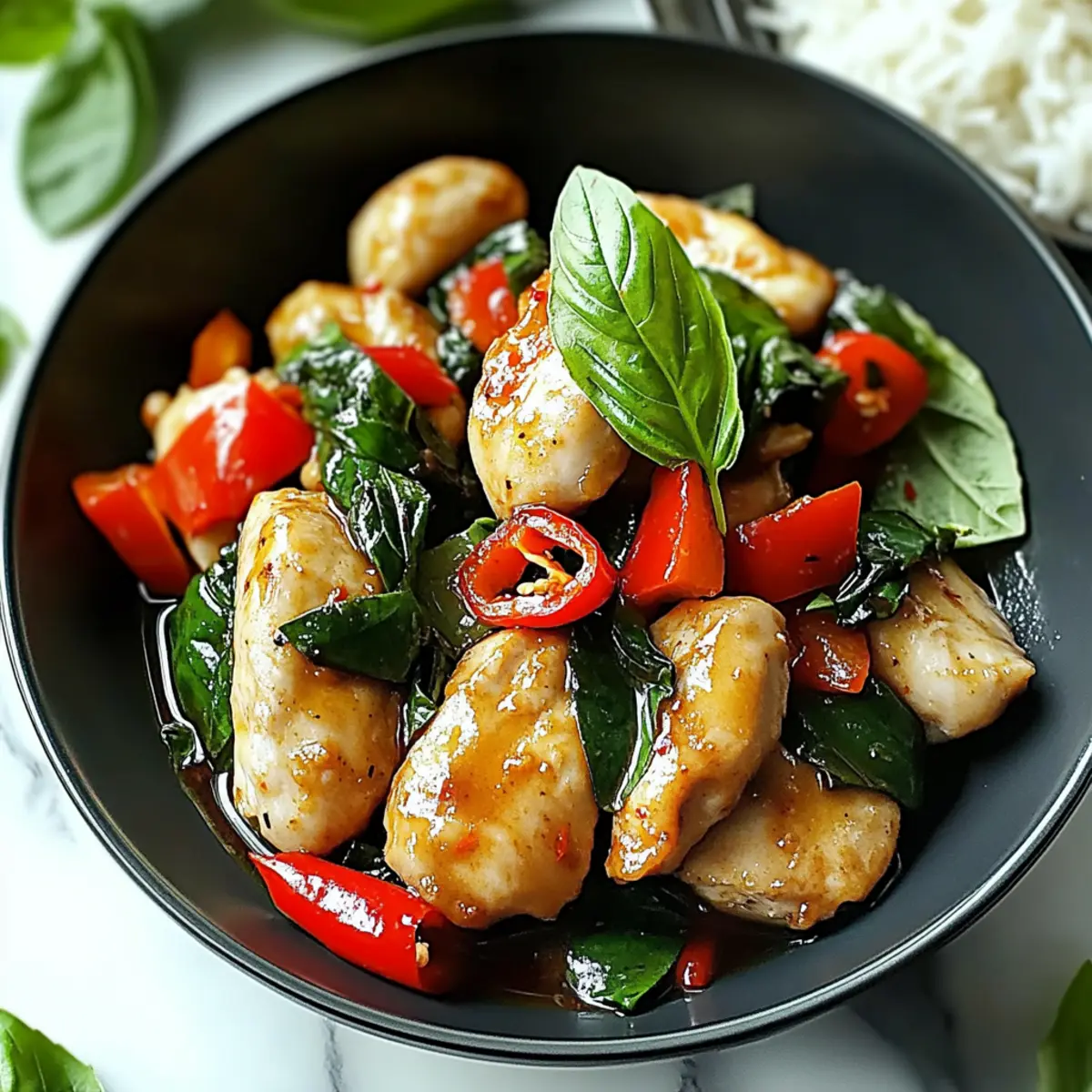
Expert Tips for Thai Basil Chicken
-
Avoid Overcrowding: Cook chicken in a single layer to ensure it browns nicely. Overcrowding the pan can lead to steaming instead of searing, affecting flavor.
-
Mind the Garlic: Keep a close watch on the garlic while sautéing. It can burn quickly and turn bitter, so stir frequently until just golden.
-
Customize the Heat: Adjust the quantity of red chili according to your spice preference. If you’re cautious with heat, start small and add more as needed.
-
Use Fresh Basil: Always opt for fresh Thai basil over dried. The vibrant flavor and aroma of fresh basil are what truly make this Thai Basil Chicken shine.
-
Check for Seasoning: Before serving, taste the dish and adjust with salt or pepper. This final tweak elevates the flavors and personalizes the dish.
-
Pair Thoughtfully: Serve your Thai Basil Chicken with jasmine rice for a traditional touch, or try it over greens for a lighter option!
What to Serve with Quick and Flavorful Thai Basil Chicken?
Elevate your dining experience by pairing this flavorful dish with sides that complement its vibrant tastes and textures.
- Steamed Jasmine Rice: The fluffy grains soak up the savory sauce, balancing the dish perfectly with a comforting, mild base.
- Cool Cucumber Salad: Crisp and refreshing, this salad brings a crunchy contrast and relieves the heat from the chilis, enhancing your meal’s enjoyment.
- Thai Spring Rolls: Light and filled with fresh veggies, these rolls are great for a starter or side, dipping into a tangy sauce that pairs beautifully with Pad Krapow Gai.
- Stir-Fried Asian Greens: Sautéed bok choy or baby bok choy adds a pop of vibrant green and tender crunch, providing a nutritious and delicious complement.
- Spicy Thai Papaya Salad: A tangy and spicy salad that introduces an explosion of flavors, serving as an exciting counterpoint to the savory chicken.
- Crispy Fried Egg: Topping your Thai Basil Chicken with a fried egg adds richness and an extra layer of decadence that is simply irresistible!
- Chilled Coconut Drink: A refreshing beverage during your meal, its mild sweetness complements the spiciness of the dish, creating a balanced taste experience.
How to Store and Freeze Thai Basil Chicken
Fridge: Store leftovers in an airtight container for up to 3 days. Keeping the dish sealed helps to maintain its flavors and prevents any absorption of other odors from the fridge.
Freezer: For longer storage, freeze Thai Basil Chicken in an airtight container for up to 3 months. Allow the dish to cool completely before freezing to avoid ice crystals forming.
Reheating: To reheat, thaw in the fridge overnight, then warm in a skillet over medium heat for about 5-7 minutes. This method preserves the texture and flavor better than a microwave.
Tips: Fresh Thai basil can lose its aroma when frozen, so consider adding fresh basil after reheating for a burst of flavor in each serving!
Make Ahead Options
These Thai Basil Chicken meal prep tips are perfect for busy nights when you want a homemade dinner without the hustle! You can chop your vegetables (bell peppers, shallots, and red chili) up to 24 hours in advance and store them in an airtight container in the refrigerator to retain their crispness. Additionally, marinate the chicken thighs in the sauce mixture (oyster sauce, soy sauce, fish sauce, and sugar) up to 3 days ahead for deeper flavor absorption. When you’re ready to cook, simply sauté the prepped ingredients as outlined in the recipe, and your Thai Basil Chicken will be just as delicious, saving you precious time without compromising on flavor!
Thai Basil Chicken Variations & Substitutions
Feel free to get creative with this recipe and make it your own! These substitutions and variations will help you explore new flavors and tailor the dish to your preferences.
- Vegetarian Option: Swap chicken for tofu or tempeh. Both work wonderfully and absorb the sauce beautifully! This twist keeps all the flavors intact while catering to your veggie-loving friends.
- Spicy Kick: For an extra kick, add sliced jalapeños or Thai bird chilies. The added heat will amplify the bold flavors and make it an exciting dish for spice enthusiasts.
- Different Proteins: Try using ground turkey or beef instead of chicken. This will change up the texture and taste, giving you a completely different yet delicious experience!
- Seasonal Veggies: Substitute bell peppers with seasonal vegetables like snap peas or zucchini for added nutrition and crunch. These variations can introduce delightful freshness to your meal.
- Gluten-Free: Use tamari instead of soy sauce for a gluten-free version. You’ll still enjoy that savory flavor without any gluten concerns!
- Sautéed Greens: Incorporate spinach or kale at the end of cooking for extra nutrition and a pop of color on your plate. These leafy greens are an easy way to boost your veggie intake!
- Coconut Milk: For a creamier sauce, stir in a splash of coconut milk right before serving. This adds richness and a hint of sweetness, making every bite luxurious.
- Rice Alternatives: Serve over quinoa or cauliflower rice for a lower-carb option. These alternatives ensure you still get all the good flavors without the heaviness of traditional rice.
If you’re looking for more delicious chicken ideas, you might enjoy my recipes for Honey BBQ Chicken or Pineapple Chicken Fried Rice. Enjoy your culinary adventure!
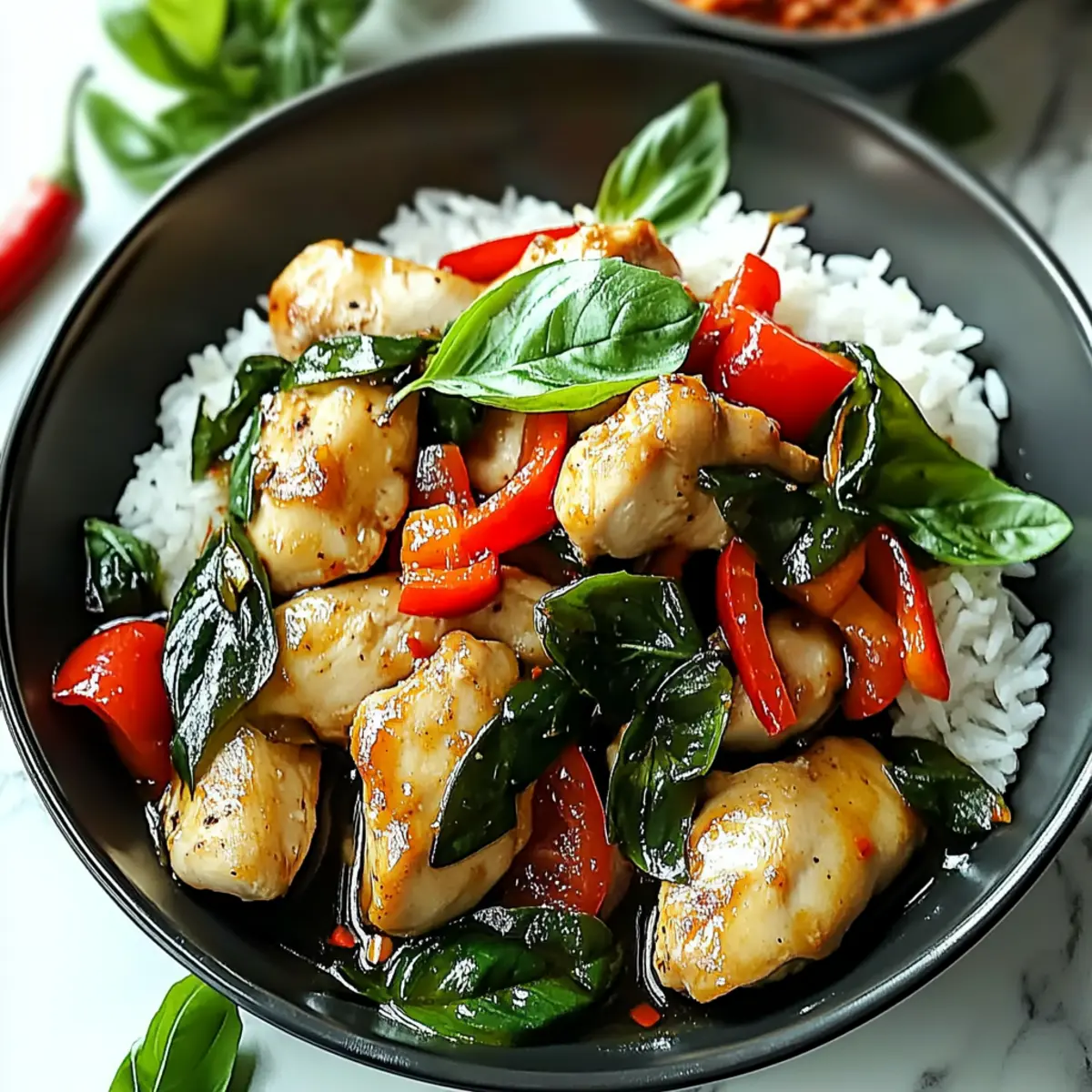
Thai Basil Chicken Recipe FAQs
How do I choose the best Thai basil for this recipe?
Absolutely! When selecting Thai basil, look for vibrant green leaves without dark spots or wilting. The leaves should smell fragrant and have a slightly peppery or floral aroma. Fresh leaves are essential for that authentic Pad Krapow Gai flavor, so avoid dried variants if possible.
How should I store leftovers of Thai Basil Chicken?
Store any leftover Thai Basil Chicken in an airtight container in the refrigerator for up to 3 days. Make sure it’s sealed well to keep the dish fresh and avoid it absorbing any other fridge odors. When you’re ready to eat, a gentle reheat in a pan for a few minutes brings back the lovely texture.
Can I freeze Thai Basil Chicken? If so, how?
Yes, you can freeze Thai Basil Chicken for up to 3 months! Here’s how to do it: Allow the dish to cool completely. Transfer it into freezer-safe containers or heavy-duty freezer bags, squeezing out any excess air. Label with the date and freeze. When ready to enjoy, thaw in the fridge overnight and reheat in a skillet over medium heat for about 5-7 minutes.
What if my chicken turns out dry?
If your chicken ends up dry, don’t fret! This can happen if it’s overcooked. For next time, ensure you use chicken thighs for juiciness and monitor cooking times closely. Aim for a golden-brown exterior, and check for doneness by slicing into the meat, looking for no pink remaining. If it’s already cooked but dry, a splash of chicken broth while reheating can help regain moisture.
Are there any dietary considerations I should be aware of?
Very! This recipe can easily be adapted for vegetarian and vegan diets. Substitute chicken thighs with extra-firm tofu or tempeh, ensuring you adjust cooking times accordingly. Just like with the chicken, sauté until golden. Additionally, if you’re looking for a gluten-free option, use tamari in place of soy sauce. Always check for allergies to fish sauce if you’re serving to guests!
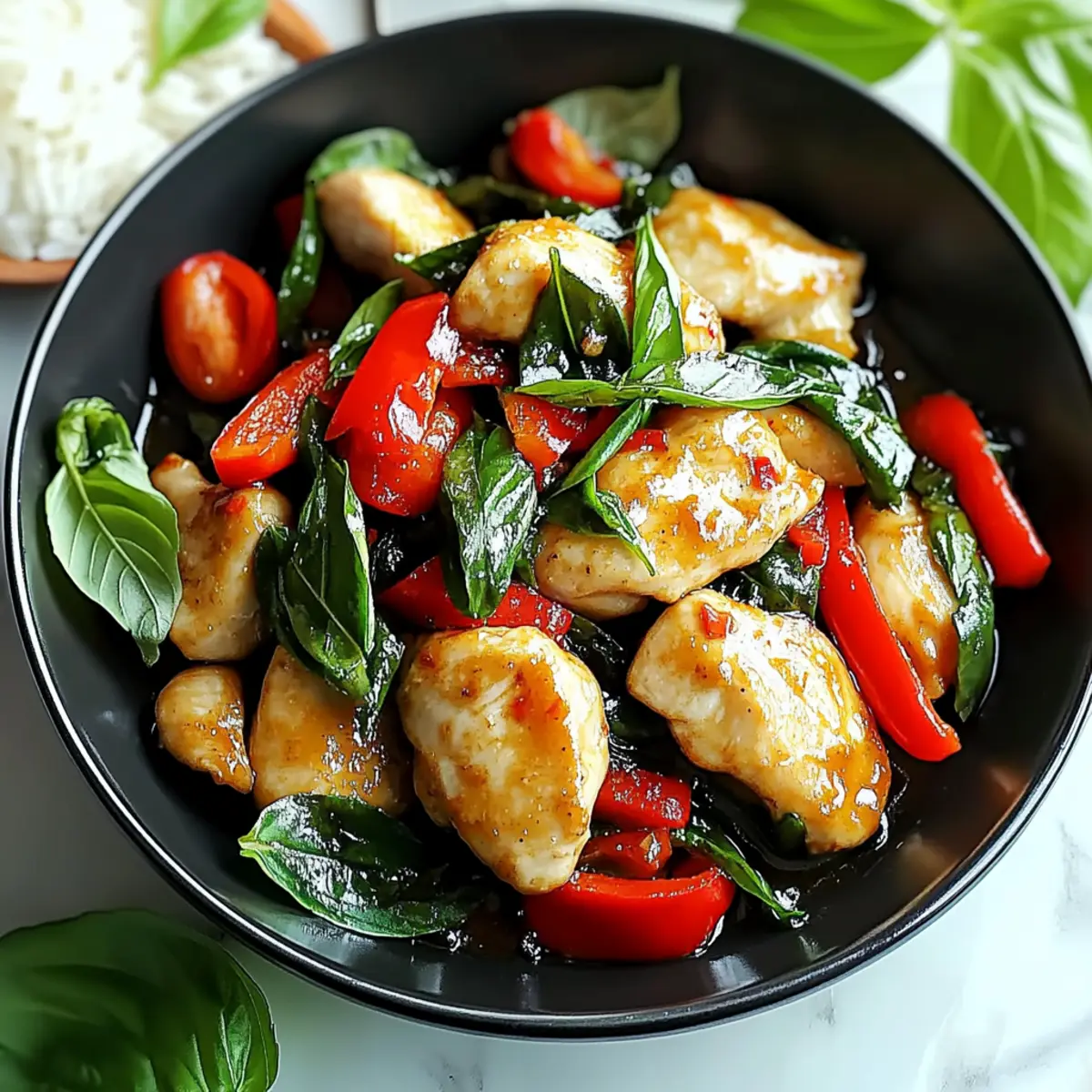
Delicious Thai Basil Chicken for a Quick Weeknight Dinner
Ingredients
Equipment
Method
- Heat the vegetable oil in a wok or skillet over medium-high heat.
- Add minced garlic and sliced shallots to the hot oil, stirring for about 1 minute.
- Introduce sliced chicken thighs to the pan, cooking for 5-7 minutes until browned.
- Toss in sliced red chili and diced bell pepper, stirring for an additional 2-3 minutes.
- Whisk together oyster sauce, soy sauce, fish sauce, sugar, and chicken broth; pour over chicken and vegetables.
- Reduce heat and let the dish simmer for 2-3 minutes to thicken the sauce.
- Stir in fresh Thai basil leaves until just wilted.
- Adjust seasoning with salt and pepper before serving.
- Serve over jasmine rice or atop greens for a lighter option.
Leave a Reply